Author: Nigel Brunsdon

NCIDU Fringe Meeting (Oct 2009)

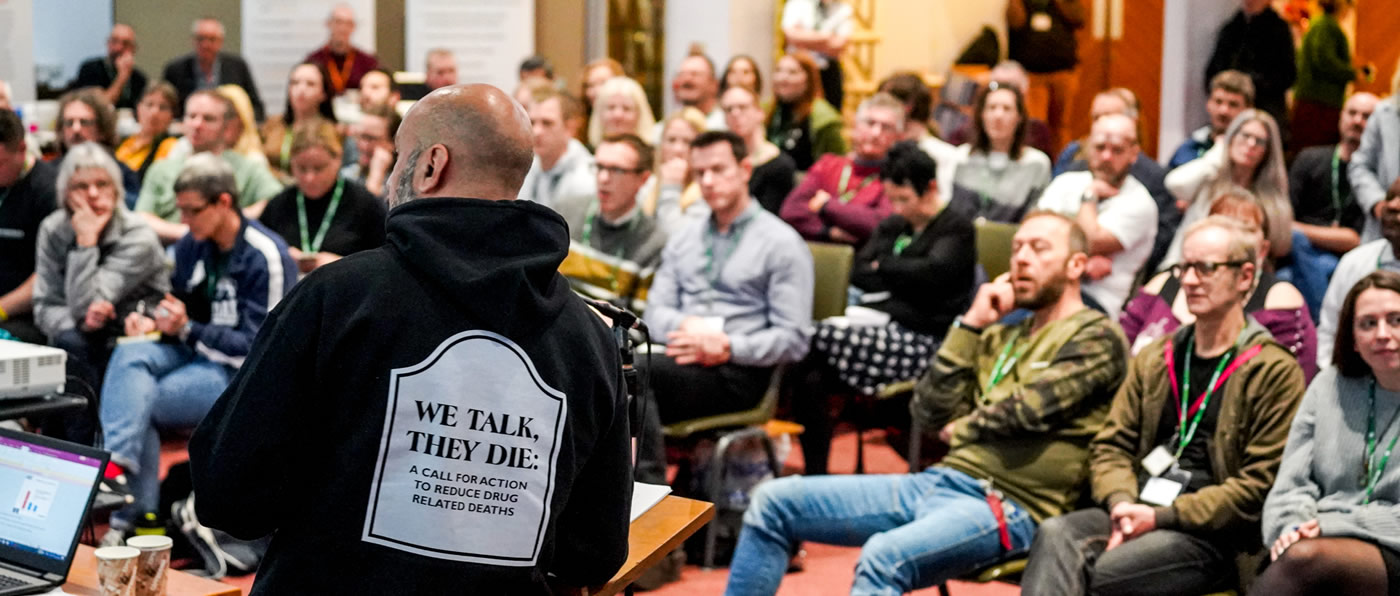
The National Needle Exchange Forum hosted an ‘Open Session’ at the National Conference on Injecting Drug Use (NCIDU) in Glasgow on Monday 26th October 2009. The session was run by the Gold Standards Team and entitled ‘From Peer to Infinity: Engaging Peers as Partners in Needle Exchange Delivery’.

It was completely full – with well over 150 participants – and received great feedback from those that attended.

Even with the UK’s developed needle and syringe programmes (NSPs), the UK is still only giving out enough injecting equipment to cover a fraction of the total number of injections. Globally, countries have committed to securing ‘Universal Access’ to harm reduction services by 2010 and it is unclear if this can be achieved with the continued reliance on fixed site needle exchanges and pharmacy needle exchange schemes. While both models of NSP have their benefits, they also have in-built and unavoidable problems with regard to access given the issues around location, fears of exposure, and opening times. Even mobile needle exchange schemes do not avoid these problems and in fact opening times will normally be even more restricted even if the number of delivery sites increases.

Around the world people who use drugs and people who sell drugs have played key roles in getting injecting equipment out to people who inject drugs. However, the UK has limited experience with such models and even where secondary needle exchange is deployed it is often informally done or achieved through workers turning a blind eye to the practice.

However, three parts of the UK did successfully deploy a mix of peer based approaches to extending the range and reach of NSP programmes. The experiences in North East Essex, East London and Edinburgh are very different in terms of context and delivery models. However, they all show that peers can be successful partners when properly engaged. Peer needle delivery can extend the volume of equipment being exchanged, and it has been shown to secure access into inner city housing estates, dispersed rural areas and importantly it allows for the engagement of a much more diverse population of injectors than accessed by traditional needle exchange programmes.

Importantly, peer-based needle exchange offers access to harm reduction services without the risk of exposure involved in formal service entry. This has been shown to be particularly effective in reach women, parents who use drugs, recreational injectors and other ‘hard-to-reach’ populations.

The evidence-base for this work is limited, and the experiences within the UK are restricted mostly to the 1990s. The National Needle Exchange Forum, however, can help to put peer exchange back on the agenda. This seminar, run by the Gold Standard Team, provides a unique opportunity to hear the experiences of these three pioneering projects with a view to sharing and disseminating best practice to the current generation of NSPs and needle exchange workers through the NNEF, and possible even developing draft policies and guidelines.

View Presentation

Continue reading

Liverpool Meeting (March 2009)

The NNEF’s 2009 All Day Meeting and AGM took place on March 9th at Liverpool John Moores University. The morning session, the World Health Organization (WHO) and the National Institute for Health and Clinical Excellence (NICE) presented their major new reports on needle exchange, and the NNEF presented the findings of the recent Members Survey on aluminium foil distribution.

In the afternoon, there were concurrent workshops on speedballing, young people’s services, and steroid use – and an exclusive screening of the new ‘Harm Reduction Works’ film on injecting and blood borne viruses.

The meeting closed with a round-up discussion with Hugo Luck from the National Treatment Agency (NNEF), and the NNEF AGM.

The presentation from Annette Verster (WHO) about WHO’s view of needle exchange and the related publications they’ve produced.

Annette’s Presentation

The presentation from Mike Kelly (NICE) about their new guidance document for needle exchanges.

Mike’s Presentation

The presentation from Jamie Bridge (NNEF) about the results of the foil consultation survey.

Jamies’s Presentation

The presentation from Dave Sibley and Helen Wilks on young people’s services.

Dave and Helen’s Presentation

The presentation from Dave Sibley and Helen Wilks on young people’s services.

Danny’s Workshop

The workshop presentation from Martin Chandler and Jim McVeigh on steroid use.

Martin and Jim’s Workshop

The HIV, hepatitis C, and injecting drug use training film, the video link below is to the documentary part of the DVD.

Continue reading

NCIDU Fringe Meeting (Oct 2008)

The National Needle Exchange Forum hosted a ‘Fringe Meeting’ at the National Conference on Injecting Drug Use (NCIDU) in London. We used the opportunity to launch a survey and consultation for NNEF members on the issue of foil provision in needle exchanges.

The results of this survey would then be presented to the Technical Committee of the Advisory Council on the Misuse of Drugs. The meeting also included training on how to use foil – in order to enable needle exchange staff to demonstrate the techniques to their clients. Below is a combined presentation.

Combined Presentation

Photos provided by Exchange Supplies

Continue reading

Derby Meeting (April 2008)

This meeting for NNEF members was held on Friday 4th April at Enterprise Park Conference Centre, Derby. The programme included a presentation from the National Treatment Agency, and discussions on interventions for crack cocaine users, steroid use, and the Mental Capacity Act. The 2008 NNEF Annual General Meeting was also held.

Presentation from the National Treatment Agency on reducing drug related harm.

NTA Presentation

The presentation from Nigel Brunsdon about Walsall Addaction’s project to distribute safer smoking equipment for crack cocaine users.

Nigel’s Presentation

The presentation from Martin Chandler talking about performance and image enhancing drugs and the way they impact on the work of needle and syringe programmes.

Martin’s Presentation

The presentation from Pauline Rigby discussing the implications of the Mental Health Capacity Act on drug services delivering needle programmes.

Pauline’s Presentation

AGM Meeting

Following the meeting members who wished to attended the NNEF Annual General Meeting.

Meeting Minutes

Continue reading

Harm Reduction Assessment

Medway Community Safety Partnership and Kent Drug and Alcohol Action Team have developed a well designed, and comprehensive harm reduction assessment form, which they have allowed us to offer here for download to inform the work of other services.

Foil Letter Template

Helen Wilks, Harm Reduction Coordinator from Torbay DAAT has allowed us to post an annotated copy of a letter they sent to their local police service that can act as a template to be used by any service wanting to get a local agreement to supply foil (or any other item that is in technical breach of Section 9a of the Misuse of Drugs Act 1971).

Continue reading

Birmingham Meeting (July 2007)

The 2007 NNEF meeting was held on Friday 6th July at the Birmingham Centre for Voluntary Action. Presentations on the day included ones from the National Treatment Agency feeding back the finding of the national NSP survey, and a presentation on water for injections.

‘Introduction’ presentation from Pauline Rigby (NNEF Co-Chair)

Pauline’s Presentation

The ‘NTA Overview’presentation from Annette Dale-Perera.

Annette’s Presentation

The ‘Findings from the NTA Survey of Needle Exchanges in England’presentation from Dima Abdulrahim.

Dima’s Presentation

The ‘Water for Injections’ presentation from Damian McLarens.

Damian’s Presentation

Continue reading